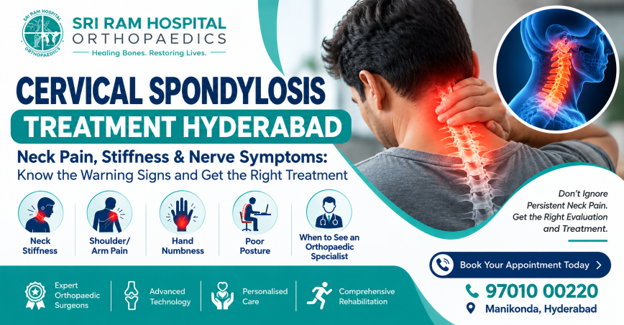
Neck pain after a long day at work may seem normal. But when neck discomfort keeps returning, lasts for several weeks, or starts affecting the shoulders, arms, or hands, it is important to identify the underlying cause.
One possible cause is cervical spondylosis, a degenerative condition affecting the cervical spine, the part of the backbone that supports and moves the neck. It becomes more common with age, but previous injuries, prolonged poor posture, and repetitive strain can also contribute to symptoms.
If you are searching for cervical spondylosis treatment in Hyderabad, a proper clinical evaluation can help determine the cause of your symptoms and the most suitable treatment.
At Sri Ram Hospitals, Manikonda, patients can consult an orthopedic specialist for persistent neck, spine, and musculoskeletal problems.
What Is Cervical Spondylosis?
The cervical spine consists of seven vertebrae with discs between them. These discs help absorb movement and allow the neck to bend and turn.
Over time, the discs and joints can undergo wear-and-tear changes. The discs may become less flexible, the joints may develop degenerative changes, and bone growth can occur in some people.
These changes do not always cause symptoms. Some people may have changes visible on an X-ray without significant pain. Symptoms are more likely when these changes affect neck movement or irritate nearby nerves.
Cervical Spondylosis Symptoms
The symptoms can differ from one person to another. Common cervical spondylosis symptoms include:
- Neck pain or stiffness
- Difficulty turning or bending the neck
- Pain around the shoulder or upper back
- Pain extending from the neck into an arm
- Tingling or pins-and-needles sensations
- Numbness in the fingers or hand
- Weakness in the arm or hand
- Increased discomfort after sitting in one position for a long time
Some people notice symptoms after prolonged desk work, driving, or using a mobile phone.
Can Cervical Spondylosis Affect the Arm or Hand?
Yes. Nerves from the cervical spine travel toward the shoulders, arms, and hands. If a nerve becomes irritated or compressed, symptoms may extend beyond the neck.
Depending on the affected nerve, a person may experience pain, burning, tingling, numbness, or weakness in part of the arm or hand. Persistent neurological symptoms should be evaluated rather than treated as simple muscle pain.
Cervical Spondylosis Causes and Risk Factors
There is usually more than one factor involved in the development of cervical spondylosis.
Age-Related Wear and Tear
As the body ages, changes in the spinal discs and joints become more common. The cervical spine moves throughout the day, and gradual changes can develop over many years.
Previous Neck Injuries
An earlier neck injury may contribute to changes in the cervical spine. If persistent pain develops after an old injury, an orthopedic evaluation can help identify possible structural problems.
Poor Posture and Prolonged Screen Use
Spending several hours at a desk or repeatedly looking down at a phone can place additional strain on the neck. An unsuitable workstation setup may also contribute to recurring discomfort.
Repetitive Physical Activity
Certain occupations, exercises, or activities involve repeated stress on the neck and upper body. These activities may aggravate existing neck problems in some people.
How Is Cervical Spondylosis Diagnosed?
Diagnosis starts with understanding the patient's symptoms and performing a physical examination. An orthopedic specialist may ask when the pain started, how often it occurs, and whether symptoms travel into the arms or hands.
The examination may include checking:
- Neck movement
- Muscle strength
- Sensation
- Reflexes
- Arm and hand function
- Signs of nerve involvement
Is an MRI Always Required?
No. Every patient with neck pain does not automatically need an MRI.
An X-ray may help assess the bones, joints, and alignment of the cervical spine. An MRI provides more detailed information about discs, nerves, and other soft tissues and may be recommended when symptoms or examination findings indicate the need for further evaluation.
The appropriate scan should be decided by the treating doctor.
Cervical Spondylosis Treatment Hyderabad
Treatment depends on the patient's symptoms, examination findings, and whether nerves or the spinal cord are affected. Many patients can be managed without surgery.
Medicines
A doctor may prescribe appropriate medicines to control pain or inflammation based on the patient's condition and medical history. Self-medication should be avoided, especially when symptoms are persistent or associated with numbness or weakness.
Physiotherapy
Physiotherapy can help selected patients improve neck movement, flexibility, posture, and muscle strength. A treatment program should be planned according to the patient's condition rather than using the same exercises for everyone.
Lifestyle and Posture Changes
Daily habits can also affect neck discomfort. Depending on medical advice, helpful measures may include:
- Taking regular breaks during desk work
- Keeping the computer screen at a comfortable height
- Avoiding prolonged downward phone use
- Maintaining a comfortable sitting posture
- Following recommended exercises
- Returning gradually to normal activities after a painful episode
These measures can support recovery but should not replace medical evaluation when symptoms are significant.
When Is Surgery Considered?
Cervical spondylosis does not automatically mean surgery.
Surgery may be considered when there is significant nerve or spinal cord compression, neurological deterioration, or persistent symptoms despite appropriate non-surgical treatment.
The decision depends on the patient's symptoms, examination, and relevant imaging findings.
When Should You See a Cervical Spine Doctor in Hyderabad?
Mild neck discomfort may settle with rest and simple measures. However, recurring or worsening symptoms should be assessed.
Consider consulting an orthopedic specialist if you have:
- Persistent or recurring neck pain
- Increasing stiffness or restricted movement
- Pain extending into the shoulder or arm
- Persistent numbness or tingling
- Weakness in the arm or hand
- Neck symptoms affecting work or sleep
Significant weakness, difficulty walking or maintaining balance, or sudden neurological changes require prompt medical attention.
Orthopedic Care at Sri Ram Hospitals, Manikonda
Sri Ram Hospitals, Manikonda, provides orthopedic care for conditions involving the bones, joints, muscles, and spine. Its orthopedic services include joint replacement, fracture and trauma care, arthroscopy, sports injury treatment, arthritis management, and rehabilitation.
For patients with ongoing neck symptoms, an orthopedic consultation can help determine whether the symptoms are related to cervical spondylosis or another condition.
Dr. Srinivas Boga – Consultant Orthopedic Surgeon
Dr. Srinivas Boga is a Consultant Orthopedic Surgeon associated with Sri Ram Hospitals, Manikonda, Hyderabad.
His qualifications include MBBS (Gold Medalist), MS (Ortho-OSM), DNB (Ortho), and FIJR Consultant. His areas of practice include trauma, arthroscopy, and joint replacement.
Patients experiencing persistent neck pain, stiffness, arm pain, numbness, or other musculoskeletal symptoms can consult an orthopedic specialist for evaluation and appropriate treatment guidance.
Frequently Asked Questions
1. What are the early signs of cervical spondylosis?
Early signs may include recurring neck stiffness, discomfort while moving the neck, reduced movement, and pain after staying in the same position for a long time.
2. Can cervical spondylosis cause pain in the hands?
Yes. If a cervical nerve becomes irritated or compressed, symptoms can travel from the neck through the shoulder and arm and reach the hand or fingers.
3. Can cervical spondylosis be treated without surgery?
Many patients can be managed without surgery. Depending on the condition, treatment may include medicines, physiotherapy, exercises, posture changes, and lifestyle modifications. Surgery is considered only in selected cases.
4. When should I see an orthopedic doctor for neck pain?
Consult an orthopedic doctor when neck pain persists, repeatedly returns, restricts movement, or is associated with arm pain, numbness, tingling, or weakness.
5. Which is the best orthopedic hospital in Manikonda for cervical spine problems?
The most suitable hospital depends on the patient's condition, specialist expertise, required treatment, and available facilities. Sri Ram Hospitals, Manikonda, provides orthopedic consultation and treatment for spine-related and other musculoskeletal conditions.
6. Can physiotherapy help with cervical spondylosis?
Physiotherapy may help selected patients improve neck movement, muscle strength, posture, and overall function. The treatment plan should be based on the patient's symptoms and clinical assessment.
Get Expert Care for Persistent Neck Pain
Recurring neck pain should not be ignored, particularly when it is accompanied by arm pain, numbness, tingling, or weakness. An orthopedic evaluation can help identify the cause and determine an appropriate treatment approach.
If you are looking for cervical spondylosis treatment in Hyderabad, consult an orthopedic specialist at Sri Ram Hospitals, Manikonda.
Book an appointment with Sri Ram Hospitals to discuss persistent neck, arm, or spine symptoms.
Doctor: Dr. Srinivas Boga, Consultant Orthopedic Surgeon
Location: Manikonda, Hyderabad
Medical Disclaimer: This article is for general educational purposes and does not replace professional medical diagnosis or treatment. If you have persistent, severe, or worsening symptoms, consult a qualified healthcare professional.