Best Orthopedic Surgeon in Hyderabad: How to Choose the Right Specialist
Choosing an orthopedic surgeon is an important healthcare decision. Whether you have persistent knee pain, arthritis, a fracture, sports injury, shoulder pain, or back pain, the right specialist can help identify the underlying cause and recommend the most appropriate treatment. If you are searching for the Best Orthopedic Surgeon in Hyderabad, it is helpful to understand what orthopedic surgeons do, which conditions they treat, and the factors that matter when selecting a specialist.
Rather than choosing a doctor based only on advertisements or online ratings, patients should look for evidence-based care, clear communication, accurate diagnosis, and a treatment plan tailored to their individual needs. Many orthopedic conditions improve with physiotherapy, medicines, lifestyle changes, or minimally invasive procedures, while some may require surgery after careful evaluation.
What Does an Orthopedic Surgeon Do?
Orthopedic surgeons diagnose, treat, and help prevent conditions affecting bones, joints, muscles, ligaments, tendons, and the spine.
Common conditions include knee pain, hip arthritis, fractures, sports injuries, shoulder problems, neck pain, back pain, osteoporosis, hand conditions, foot disorders, ligament injuries, meniscus tears, and joint degeneration. Treatment plans are individualized and may include non-surgical and surgical options.
Signs You Should Consult an Orthopedic Specialist
You should consult an orthopedic specialist if pain persists, limits your daily activities, follows an injury, or affects movement.
Common warning signs include:
- Joint pain lasting more than two weeks
- Swelling or stiffness
- Difficulty walking
- Limited movement
- Sports injuries
- Recurrent joint instability
- Bone fractures
- Persistent neck or back pain
- Numbness associated with musculoskeletal conditions
How to Choose the Right Orthopedic Surgeon
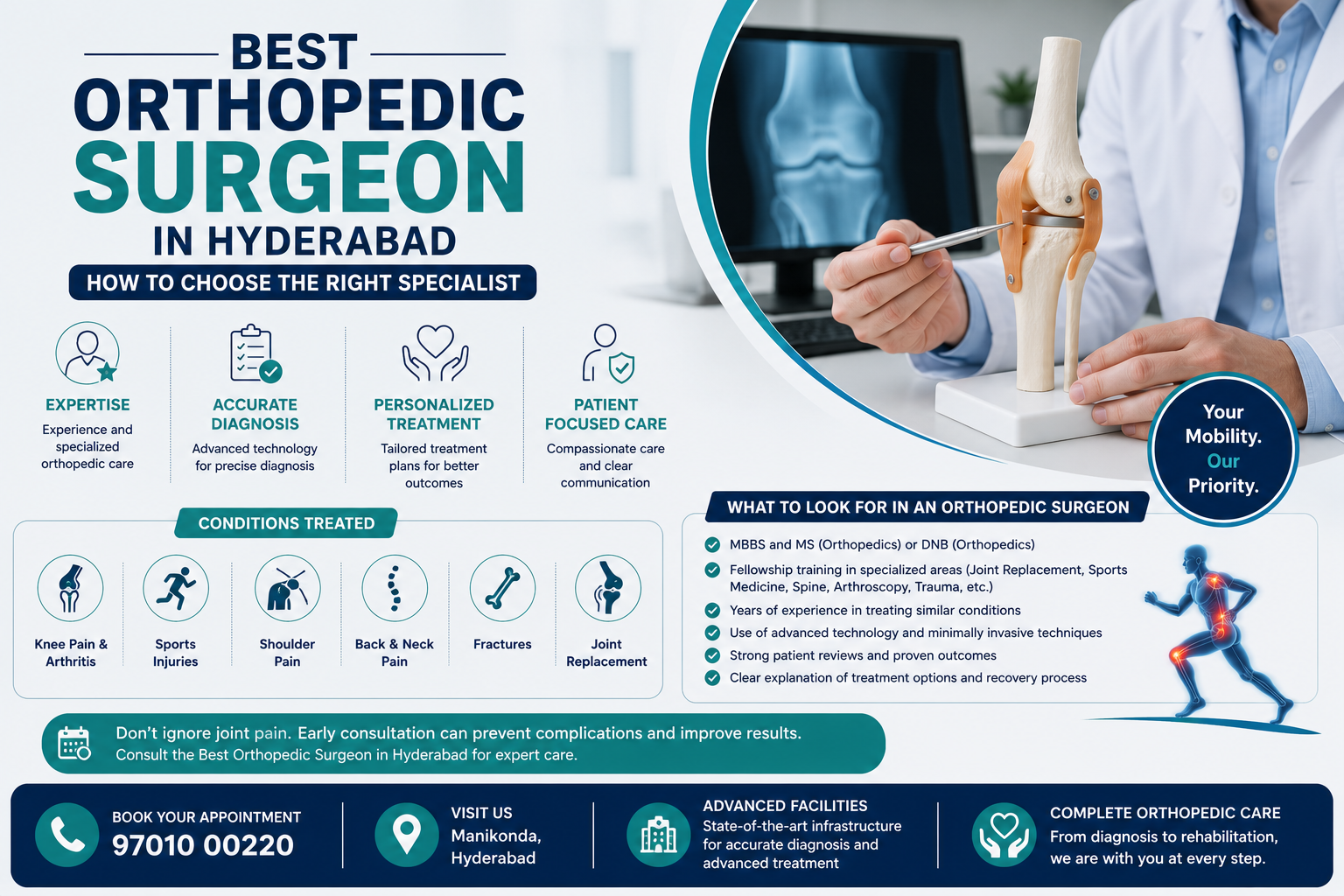
When comparing specialists, consider the following:
- Qualifications and orthopedic training.
- Experience managing your specific condition.
- A detailed examination before recommending treatment.
- Clear explanation of diagnosis and available treatment options.
- Access to imaging, rehabilitation, and physiotherapy.
- Shared decision-making that considers your goals, lifestyle, and overall health.
- Appropriate follow-up care and rehabilitation guidance.
The best orthopedic care is patient-centred and based on clinical findings rather than routine recommendations.
How Orthopedic Conditions Are Diagnosed
Diagnosis begins with a detailed medical history and physical examination. Depending on your symptoms, the doctor may recommend X-rays, MRI, CT scan, ultrasound, or laboratory investigations. Not every patient requires advanced imaging. Tests are selected according to the suspected condition.
Treatment Options
Treatment depends on the diagnosis, severity, age, activity level, and general health.
Non-surgical options:
- Medicines prescribed by your doctor
- Physiotherapy
- Exercise programmes
- Weight management
- Activity modification
- Braces or supports
- Joint injections in selected cases
Surgical options:
- Arthroscopy
- Fracture fixation
- Ligament reconstruction
- Meniscus repair
- Shoulder procedures
- Hip replacement
- Knee replacement
Surgery is considered only when clinically appropriate and after discussing benefits, risks, recovery, and alternatives.
Comparison Table
| Factor | Why It Matters | Questions to Ask | Benefit |
|---|---|---|---|
| Experience | Condition-specific expertise | Do you regularly treat this problem? | Better individualized planning |
| Diagnosis | Correct cause identification | Will I need imaging? | Appropriate treatment |
| Communication | Informed decisions | What are all my options? | Greater confidence |
| Rehabilitation | Supports recovery | Will physiotherapy be needed? | Improved long-term outcomes |
Why Early Treatment Matters
Ignoring persistent joint pain may result in reduced mobility, muscle weakness, worsening arthritis, or limitations in daily activities depending on the underlying condition. Early evaluation may help diagnose treatable conditions before they progress.
Local SEO: Orthopedic Care in Hyderabad
Patients in Hyderabad should seek timely orthopedic evaluation for persistent joint pain, sports injuries, fractures, or arthritis. Access to early diagnosis and rehabilitation can support better functional outcomes. Sri Ram Hospitals offers orthopedic consultations and treatment planning based on individual clinical assessment.
Key Takeaways
- Choose a specialist based on expertise and clinical approach rather than marketing claims.
- Accurate diagnosis is the foundation of effective treatment.
- Many orthopedic problems improve without surgery.
- Rehabilitation is an important part of recovery.
- Treatment should always be personalized.
When to See a Doctor
Seek prompt medical attention if you cannot bear weight after an injury, notice severe swelling or deformity, have fever with a swollen joint, or experience persistent pain that interferes with work, sleep, or daily activities.
FAQs
1. Who is the best orthopedic surgeon in Hyderabad?
Choose a specialist with relevant expertise, experience, and a patient-centred approach.
2. Can all orthopedic problems be treated without surgery?
No. Many improve with conservative care, while others require surgery depending on the diagnosis.
3. What tests are commonly used?
X-rays, MRI, CT scan, and physical examination are commonly used where appropriate.
4. Can physiotherapy help?
Yes. Physiotherapy plays an important role in many orthopedic conditions.
5. What should I bring to my appointment?
Previous reports, imaging, medication list, and details of your symptoms.
6. Do sports injuries always need surgery?
No. Treatment depends on the type and severity of injury.
7. How long does recovery take?
Recovery varies according to the condition and treatment.
8. Can arthritis be managed without knee replacement?
Many patients benefit from exercise, medicines, weight management, and physiotherapy before surgery is considered.
Medically Reviewed By:
[Doctor Name]
[Qualification]
Consultant Orthopedic Surgeon
Last Updated: July 2026