Hip Replacement in Hyderabad: Who Needs Surgery and What to Expect During Recovery?
Hip pain can gradually affect walking, climbing stairs, sitting, sleeping and other everyday activities. Although many hip problems can initially be managed with medicines, physiotherapy, activity modification and other non-surgical treatments, advanced joint damage may require surgery.
For people searching for hip replacement in Hyderabad, two common questions are: Who actually needs hip replacement surgery, and what should patients expect during recovery? The answer depends on the cause and severity of hip damage, symptoms, mobility, imaging results, overall health and response to previous treatment.
Quick Answer: When Is Hip Replacement Needed?
Hip replacement may be recommended when significant damage to the hip joint causes persistent pain, stiffness, and difficulty with daily activities, especially when appropriate non-surgical treatments no longer provide enough relief. An orthopedic surgeon considers symptoms, physical examination, imaging, and overall health before recommending surgery.
Hip replacement is not automatically necessary for everyone with hip pain. A proper diagnosis is the first step toward choosing the right treatment.
What Is Hip Replacement Surgery?
Hip replacement, also called total hip replacement or total hip arthroplasty, is a procedure in which damaged parts of the hip joint are replaced with artificial components.
The hip is a ball-and-socket joint. The ball is located at the upper end of the thigh bone, while the socket forms part of the pelvis. Healthy cartilage allows the joint surfaces to move smoothly.
Conditions such as advanced arthritis, certain fractures, avascular necrosis and other forms of joint damage can affect this movement. As the joint deteriorates, pain, stiffness and reduced mobility can make normal activities increasingly difficult.
During total hip replacement, damaged joint surfaces are removed and replaced with prosthetic components. The goal is to reduce pain and improve hip function and mobility.
Who May Need Total Hip Replacement?
Several conditions can cause serious hip joint damage and may eventually require replacement.
Hip Osteoarthritis
Osteoarthritis can gradually wear down the cartilage within the hip. As the condition progresses, patients may experience pain, stiffness, reduced movement, and difficulty performing everyday activities.
Rheumatoid Arthritis
Rheumatoid arthritis can cause ongoing inflammation and progressive joint damage. In advanced cases, hip involvement may result in persistent pain and reduced function.
Avascular Necrosis
Avascular necrosis occurs when blood supply to part of the bone is reduced. In advanced stages, the affected bone can weaken or collapse, potentially causing significant damage to the hip joint.
Severe Hip Fractures
Certain serious fractures can damage the hip joint substantially. Depending on the fracture, bone quality, age and individual circumstances, hip replacement may sometimes be considered.
Advanced Hip Joint Damage
Previous injuries, degenerative conditions and other hip disorders can progressively affect joint function. When damage becomes severe and symptoms significantly interfere with daily life, joint replacement may become an option.
What Symptoms Suggest You Should See an Orthopedic Specialist?
Having hip pain does not automatically mean that you need surgery. However, persistent or worsening symptoms should be evaluated by an orthopedic specialist.
Common symptoms include:
- Persistent hip or groin pain
- Pain while walking or standing
- Increasing hip stiffness
- Difficulty climbing stairs
- Reduced range of hip movement
- Difficulty putting on socks or shoes
- Pain that affects sleep
- Difficulty getting in or out of a chair
- Reduced walking distance
- Increasing difficulty performing daily activities
If hip pain is affecting mobility, independence or quality of life, an orthopedic evaluation can help identify the underlying cause and determine the appropriate treatment.
Is Hip Replacement the First Treatment for Hip Pain?
No. Hip replacement is not the first treatment for every patient with hip pain.
Depending on the diagnosis and severity, an orthopedic specialist may recommend:
- Physiotherapy
- Activity modification
- Prescribed medicines
- Strengthening and mobility exercises
- Injections in selected cases
- Other condition-specific treatments
Patients with mild or moderate hip problems may improve with non-surgical care. However, when significant joint damage is present and symptoms continue despite appropriate treatment, surgery may become a reasonable option.
This is why people considering hip replacement surgery in Hyderabad should undergo an orthopedic assessment before making a decision.
How Does a Doctor Decide If You Need Hip Replacement?
There is no single age or symptom that automatically means a person needs hip replacement.
An orthopedic surgeon may consider several factors:
- Pain severity: How severe is the pain, and how frequently does it occur?
- Mobility: Can you walk, climb stairs, sit and stand comfortably?
- Joint damage: Do X-rays or other imaging studies show significant deterioration?
- Response to treatment: Have medicines, physiotherapy, injections or activity changes provided sufficient improvement?
- Daily-life impact: Is the hip problem affecting sleep, work, household activities or independence?
- Overall health: Are there medical factors that could affect surgery or rehabilitation?
The decision should be personalized according to the patient's condition, needs and treatment goals.
What Happens Before Hip Replacement Surgery?
Pre-operative assessment is an important part of hip replacement treatment.
Your orthopedic team may review your medical history, current medications, previous treatments and symptoms. A physical examination can help assess hip movement, strength and functional limitations.
Depending on your condition, investigations may include:
- X-rays
- MRI or CT scans when required
- Blood tests
- Other medical assessments based on your health
The surgeon can then discuss the diagnosis, treatment options, expected benefits, possible risks and rehabilitation requirements.
Proper planning helps ensure that the proposed treatment is suitable for the individual patient.
What Happens During Total Hip Replacement?
During total hip replacement, the damaged portions of the hip joint are replaced with artificial components.
The procedure generally involves accessing the hip joint, removing damaged joint surfaces, preparing the bone, and positioning the prosthetic components. The surgeon then checks the stability and movement of the reconstructed joint before completing the procedure.
The surgical approach and implant selection can vary depending on the patient's anatomy, joint condition, and clinical requirements.
Advanced surgical planning and minimally invasive techniques may be considered where clinically appropriate.
What Should You Expect During Hip Replacement Recovery?
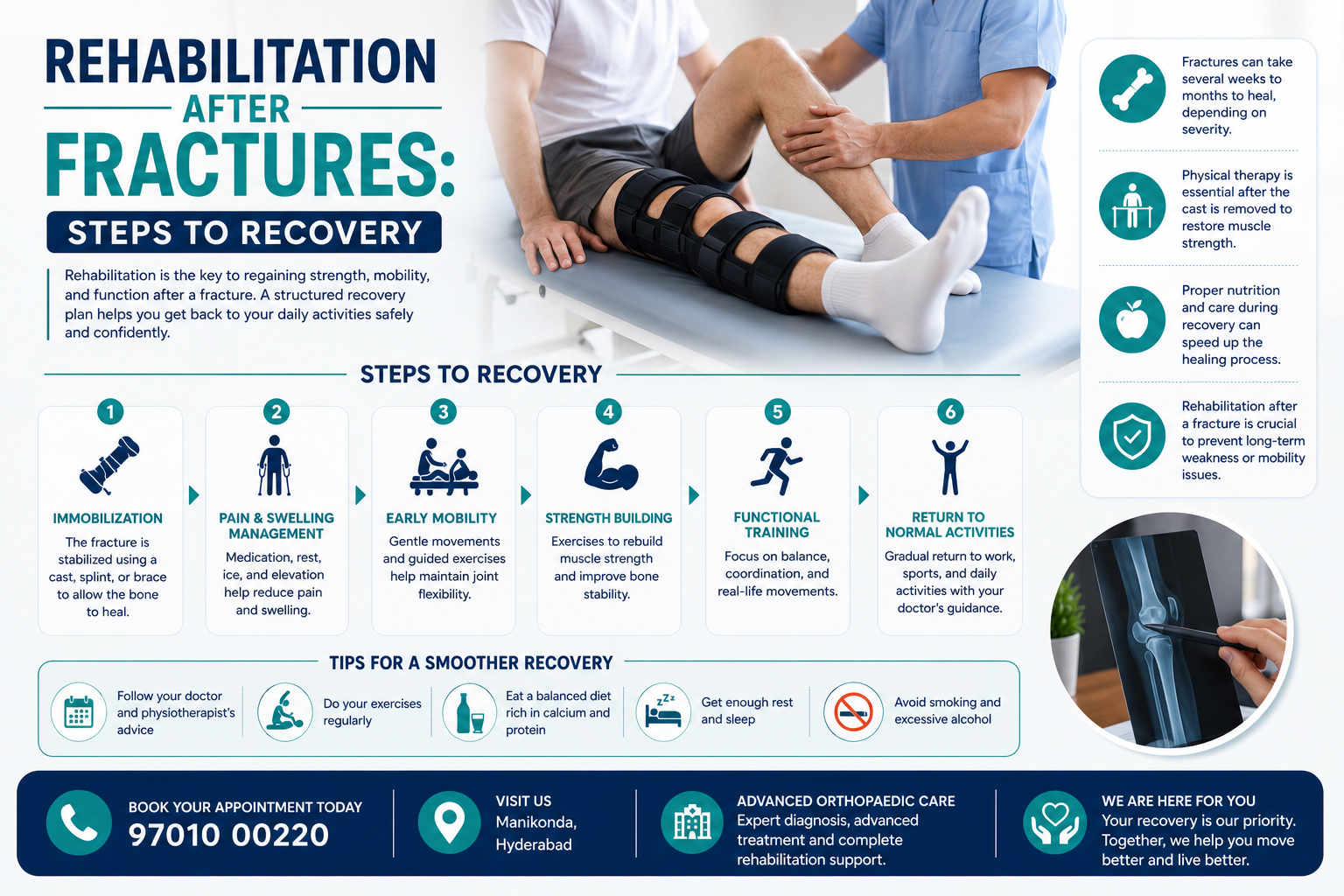
Hip replacement recovery is a gradual process that usually involves early mobility followed by progressive rehabilitation.
After surgery, the healthcare team monitors recovery and provides guidance on movement, exercises and daily activities.
Early Mobility
Patients may initially need assistance while standing and walking. A walker, crutches or another mobility aid may be recommended depending on individual needs.
Physiotherapy
Physiotherapy is an important part of recovery. Rehabilitation may focus on improving:
- Hip movement
- Muscle strength
- Balance
- Walking ability
- Functional independence
Gradual Return to Activities
Daily activities are generally increased progressively according to healing, strength and the surgeon's instructions.
Recovery is different for every patient. Age, general health, pre-surgery mobility, muscle strength and participation in rehabilitation can influence recovery progress.
Can You Walk Normally After Hip Replacement?
Many patients can progressively return to comfortable and independent walking after hip replacement, but recovery varies from person to person.
Walking ability can depend on pre-surgery mobility, muscle strength, general health, rehabilitation and the individual's response to treatment.
Your orthopedic surgeon and physiotherapist can provide guidance based on your recovery rather than applying a fixed timeline to every patient.
How Long Does a Hip Replacement Last?
The longevity of a hip replacement can vary between patients.
Factors such as implant design, activity level, age, body weight, bone quality and individual health can influence long-term implant performance.
Rather than assuming that every hip replacement lasts for exactly the same period, discuss the expected durability of your specific implant and individual circumstances with your orthopedic surgeon.
Choosing a Hip Replacement Hospital in Hyderabad
Choosing a hip replacement hospital in Hyderabad involves more than simply finding a facility that performs the procedure.
Patients should consider:
- Orthopedic surgeon qualifications and experience
- Joint replacement expertise
- Diagnostic and imaging facilities
- Pre-operative assessment
- Surgical planning
- Physiotherapy and rehabilitation support
- Post-operative monitoring
- Follow-up care
- Clear communication about treatment options and risks
For patients in Manikonda, Puppalaguda, Shaikpet and surrounding areas of Hyderabad, Sri Ram Hospitals - Orthopedics provides evaluation and treatment for hip conditions, including total joint replacement when clinically appropriate.
Meet Dr. Srinivas Boga - Consultant Orthopedic Surgeon
Dr. Srinivas Boga is a Consultant Orthopedic Surgeon associated with Sri Ram Hospitals - Orthopedics.
His qualifications include MBBS (Gold Medalist), MS (Ortho-OSM), DNB (Ortho) and FIJR Consultant. His areas of specialization include trauma, arthroscopy and joint replacement.
His treatment approach emphasizes considering non-surgical options when appropriate, while providing arthroscopic and joint replacement procedures when clinically indicated.
For patients looking for a hip replacement surgeon in Hyderabad, discussing the diagnosis, treatment alternatives, potential risks and rehabilitation requirements with a qualified orthopedic specialist is an important part of making an informed decision.
When Should You See an Orthopedic Surgeon for Hip Pain?
Consider an orthopedic consultation if:
- Hip pain continues despite basic treatment
- Pain is affecting your sleep
- Walking has become difficult
- You are struggling to climb stairs
- Hip stiffness is getting worse
- Daily activities are becoming restricted
- You have a known hip condition that is progressing
- You have experienced a significant hip injury
Seek urgent medical evaluation after a serious injury if you have severe hip pain, cannot bear weight or suspect a fracture.
For ongoing hip pain without an acute injury, an orthopedic consultation can help identify the cause and determine whether conservative treatment, a procedure or joint replacement may be appropriate.
Frequently Asked Questions About Hip Replacement
Is hip replacement necessary for everyone with hip arthritis?
No. Many patients with mild or moderate hip arthritis can initially be managed with non-surgical treatment. Replacement may be considered when joint damage is advanced and pain or mobility problems continue despite appropriate treatment.
What is the best age for hip replacement?
There is no universal best age for hip replacement. The decision depends on joint damage, symptoms, mobility, overall health and response to previous treatment.
Is total hip replacement a major surgery?
Yes. Total hip replacement is a significant orthopedic procedure that requires appropriate medical assessment, surgical planning, post-operative care and rehabilitation.
How soon can I walk after hip replacement?
Walking is generally introduced progressively after surgery, often with assistance initially. The exact timing depends on the patient's health, surgical recovery and rehabilitation plan.
Is physiotherapy necessary after hip replacement?
Physiotherapy is an important part of many hip replacement recovery plans. It can help improve strength, mobility, balance and walking ability during recovery.
What tests are needed before hip replacement?
Depending on the patient's condition, evaluation may include a physical examination, X-ray, MRI or CT imaging and blood tests. The exact tests depend on medical history and surgical requirements.
Where can I get hip replacement treatment in Hyderabad?
The right hospital depends on the orthopedic team's qualifications, joint replacement expertise, diagnostic facilities, surgical planning and rehabilitation support. Sri Ram Hospitals - Orthopedics in Manikonda, Hyderabad, is an option for patients seeking evaluation and treatment for hip conditions and total hip replacement.
Final Takeaway
Hip replacement may be an appropriate treatment for selected patients with advanced hip joint damage, persistent pain and significant difficulty with everyday activities. However, surgery is not automatically required for everyone experiencing hip pain.
An orthopedic evaluation can help identify whether symptoms are related to arthritis, injury, avascular necrosis, or another hip condition and whether non-surgical treatment or joint replacement is more suitable.
If persistent hip pain is affecting your walking, sleep or daily activities, seeking an orthopedic evaluation can help you understand your condition and treatment options.
Sri Ram Hospitals - Orthopedics, Manikonda, Hyderabad, provides orthopedic evaluation and treatment for patients dealing with hip conditions and joint replacement needs. Consult an orthopedic specialist to understand the most appropriate treatment for your condition.